Insights
The uneven transition: Inequality in electric vehicles
Posted April 01, 2026
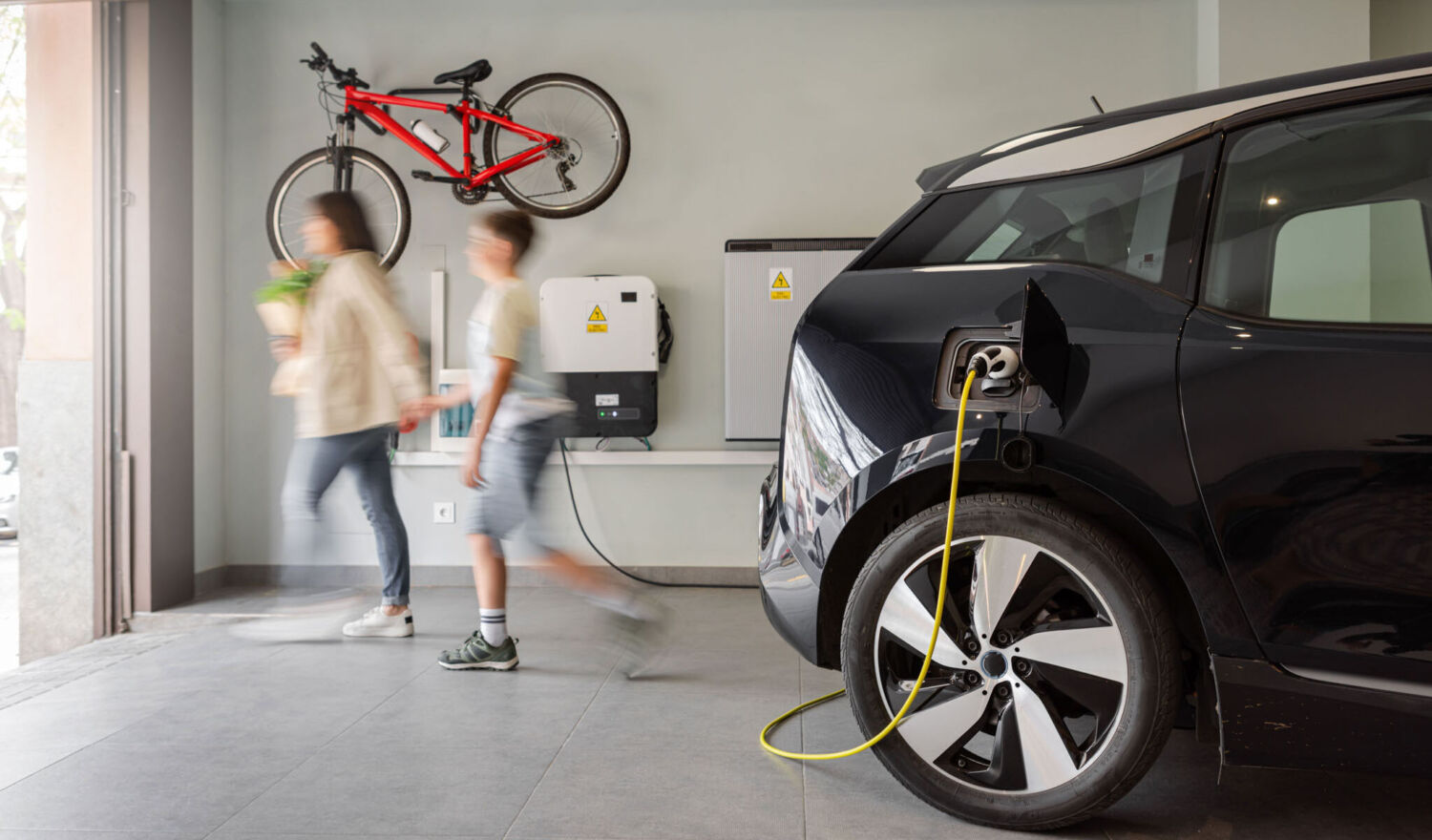

Electric vehicle uptake in Australia is growing quickly, but not evenly.
In the first six months of 2025, Australians bought 72,758 EVs [1], up 24.4% on the same period in 2024, signalling a rapid shift in the market.
Rising petrol prices, influenced by global conflict and supply pressures, are prompting more households to reconsider the cost of driving. Who can make the switch, and where it is happening, tells a broader story about access, infrastructure, and cost. This article looks at how electric vehicle (EV) uptake varies across Melbourne and Sydney and what this means for an equitable transition. It draws on EV data and ABS SEIFA measures of socioeconomic advantage and disadvantage, alongside other research on income, car ownership and access to charging infrastructure to understand what is shaping take-up.
The growing focus on EVs is also being shaped by concerns beyond emissions. In response to oil supply risks linked to conflict in the Middle East, the New South Wales Premier, Chris Minns, made the comments while announcing the state’s fuel-saving measures under the National Fuel Security Plan, noting that EVs “can’t just be for snobs that live in the eastern suburbs” and need to be accessible to everyday households. The comment reflects a broader reality: oil dependency is a vulnerability that affects all parts of the community, yet those most exposed are often the least able to move away from it.
Electric vehicle uptake is not evenly distributed
Across Melbourne and Sydney, EV uptake tends to be higher in areas with greater socioeconomic advantage.
This likely reflects a combination of factors. Households with higher incomes are more able to absorb the upfront cost of an EV, even if long-term running costs are lower, and until recently, there was a lack of affordably priced EV models available in Australia. These areas also tend to have higher rates of car ownership and greater access to off-street parking, making home charging more feasible.
More broadly, EV uptake in Australia is moving beyond early adopters, with EVs now accounting for around 12% of all new car sales [1]. This points to a shift toward more mainstream adoption.
In Greater Melbourne, earlier patterns of higher uptake are observed in parts of Monash and Boroondara, where households are relatively well-off and car-dependent. In contrast, lower uptake is more common in areas such as Brimbank, Hume and Whittlesea, where disadvantage is higher, and cost barriers are more pronounced.
Inner-city areas present a different pattern. Despite relatively high incomes, EV uptake is lower in places like the City of Melbourne, Yarra, and Port Phillip. This likely reflects lower car ownership and better access to public transport, reducing the need for a private vehicle altogether.
However, over the past two years, EV uptake has become more geographically widespread. Places like Wyndham and Melton have seen relatively quick growth in EV registrations, despite having moderate levels of disadvantage.
A similar pattern can be seen across Greater Sydney. EV uptake first began increasing in more affluent northern and inner areas, while lower uptake is more common in parts of the south-west, where households face both financial constraints and limited transport alternatives. Over the past two years, EV uptake has begun to increase outside this northern corridor, picking up in areas like the Inner West; however, it remains low in the areas with the highest levels of disadvantage.
These patterns suggest that EV uptake is shaped by a mix of income, housing type, transport options, and access to infrastructure, rather than by any single factor. While uptake in households purchasing EVs is expanding across cities and regions, it largely reinforces existing patterns of advantage rather than reshaping them.
These patterns across Greater Melbourne and Greater Sydney (as well as the rest of Australia) can be explored in the map below.
These national maps at the postcode level illustrate the patterns described above, showing battery electric vehicle (BEV) registrations per 1,000 dwellings from 2021 through to 2025 (based on registration data at 31 January each year from the Australian Automobile Association (AAA) [2] and dwellings data from the ABS 2021 Census of Population and Housing [3]), alongside levels of socioeconomic advantage and disadvantage from the ABS Socio-Economic Indexes for Areas (SEIFA) [4].
This reinforces that EV uptake is not just an environmental story. It is also a cost-of-living and equity issue, playing out differently across our cities. Areas with lower uptake are often those with higher car dependency, greater exposure to fuel price changes, and fewer pathways to transition. Further exploration of these drivers could inform EV readiness at the state and local levels.
It also demonstrates the rapid change not only in the purchase of EVs but also in the spatial distribution of EV’s over time, beyond capital cities to the regions.
Access to charging remains a key barrier
Access to charging infrastructure continues to influence whether households can adopt EVs.
Most EV users rely on private charging at home or work, with 93% of EV drivers able to charge at home [5]. This is significantly easier for homeowners with off-street parking, often supported by rooftop solar, than for renters or apartment dwellers.
For many renters and apartment households, barriers include strata restrictions, the cost of upgrading shared electrical systems, and limited control over parking arrangements. These constraints can make EV ownership impractical, even where there is interest. This aligns with findings from SGS’s Electrification of Transport in the City Strategy for the City of Sydney, which identifies private charging in apartment buildings as a key challenge and highlights the need to support off-street charging in existing developments.
Public charging can help bridge this gap, but availability remains uneven. Inner areas tend to have a higher concentration of chargers, while outer and more disadvantaged areas often have fewer options. These concerns about charging availability have led many consumers to choose a plug-in hybrid electric vehicle (PHEV) over a typical BEV, with PHEV sales up 218% year-on-year in 2025 [1].
This is reinforced by AAA polling in 2025, which found that 60% of prospective EV buyers identified vehicle range and access to charging as their main concern [6]. This is where the challenge becomes clear. Many households in outer areas are more reliant on cars due to longer travel distances and limited public transport, yet may have fewer practical pathways to switch to EVs.
Cost remains a constraint
While EVs can offer lower running costs over time, the upfront purchase price remains a barrier.
For lower-income households, this can limit their ability to switch, even when there are long-term financial benefits. In some cases, households are already reliant on car travel due to limited alternatives, reinforcing existing pressures rather than alleviating them.
The evidence suggests that most households are not inherently resistant to EVs. Rather, they are constrained by affordability and access to infrastructure. Addressing these constraints is key to making EVs genuinely accessible.
What this means for cities and local government
While many drivers of EV uptake sit beyond local government control, councils still have an important role to play in shaping a more equitable transition.
This includes:
- Supporting the rollout of public charging infrastructure, particularly in higher-density and rental areas
- Leading by example through transitioning council fleets
- Working with neighbouring councils to coordinate infrastructure planning
- Advocating for policy reforms, including “right to charge” provisions that make it easier for renters and apartment residents to install shared or private EV charging
- Supporting the development of second-hand EV markets over time
Moving towards a more equitable transition
The transition to electric vehicles is underway, but it is not yet reaching all parts of the community in the same way.
The patterns observed across Australia’s largest cities point to a broader challenge. Without targeted intervention, the benefits of EV adoption risk being unevenly distributed, with market-led uptake reinforcing existing inequalities.
As energy security becomes a growing concern, there is a case for reframing EV policy not only as a climate initiative but also as a practical response to fuel volatility and rising transport costs.
At the same time, EVs alone will not resolve deeper structural challenges in our cities. Many households remain reliant on private cars due to long distances to jobs, education, health and other services, and limited access to high-quality public transport. Expanding public transport networks and improving access to housing in well-connected, walkable locations will remain critical to reducing car dependency and cost-of-living pressures over time.
Local governments role is not to drive uptake alone, but to shape the conditions that determine who can participate.
State and federal governments also have a critical role to play through funding, policy and regulation that support more equitable access. This includes reforms such as “right to charge”, alongside investment in public charging infrastructure, EV-ready planning standards and broader market incentives. While many of these levers sit outside local government control, councils can advocate for change and support implementation at the local level.
As the transition accelerates, a clearer understanding of how these barriers play out across different places will be critical to shaping effective responses. We’re continuing to explore these questions with governments and communities across Australia. If you’re working through similar challenges, we’d welcome a conversation.
We would like to acknowledge the insights provided by Bryce Gaton from EV Choice for an earlier version of this article published with LGiU Australia.
References
[2] https://www.aaa.asn.au/research-data/electric-vehicle/
[3] https://www.abs.gov.au/statistics/people/housing/housing-census/latest-release
[5] https://electricvehiclecouncil.com.au/wp-content/uploads/2026/03/2025-Ownership-Survey.pdf
[6] https://www.aaa.asn.au/2025/12/new-test-results-to-help-ev-buyers
Connect with us on LinkedIn