Insights
Valuing First Nations culture in cost benefit analysis: From principle to practice
Posted March 18, 2026
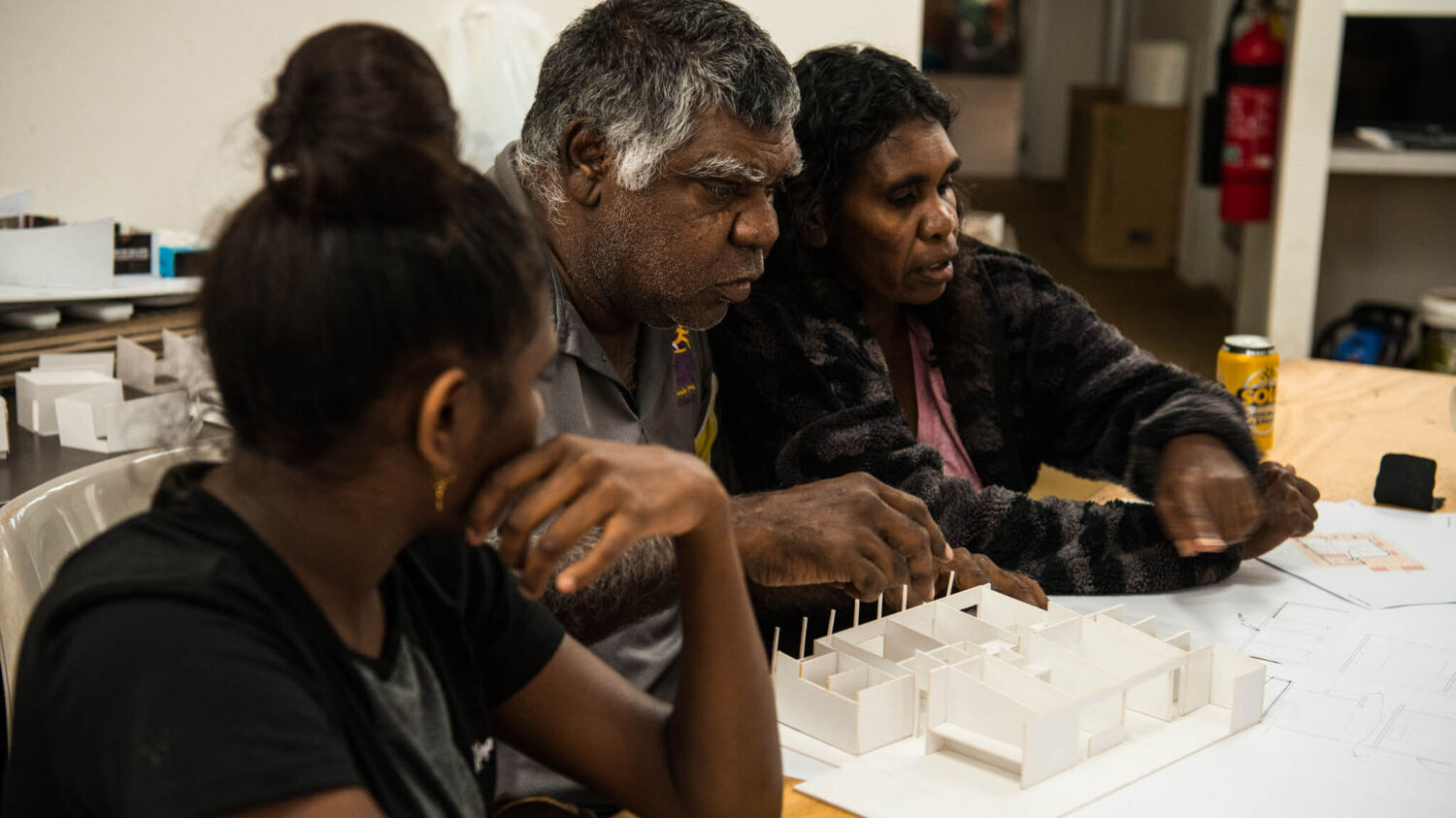

Image credit: Andrew Qulity
In 2024, the New South Wales Treasury released the First Nations Investment Framework, a guide to designing, assessing and evaluating First Nations initiatives. In this article, we explore what the Framework means in practice, highlighting its key messages and how we have applied these principles in our own work at SGS.
A note on language:Throughout this article, the terms ‘First Nations’ and ‘Aboriginal’ is used to refer more broadly to the Aboriginal and Torres Strait Islander peoples across Australia. When referring to First Nations relationship to Country, it is capitalised; when referring to settler relationships to country as land, it is not.
What is culture?Culture can be easy to recognise but difficult to define. It carries different meanings for different people and communities. Within First Nations communities, some elements of culture are not concepts that can or should be widely understood or interpreted by others. First Nations culture may be sacred or private, shared or practised only in specific contexts. It is complex, diverse and evolving.
In this article, when we refer to culture, we acknowledge its richness and complexity, as well as the distinct ways in which First Nations peoples define, protect, and express it.
Between 2022 and 2024, the NSW Government Treasury worked alongside First Nations partners to develop the First Nations Investment Framework. The Framework is the first of its kind in Australia and marks an important shift in how governments approach investment decisions. At its core, the Framework seeks to embed First Nations perspectives at every stage of program and policy development from design and implementation through to evaluation, including cost benefit analysis.
Cost benefit analysis is a well-established and widely used tool to inform government funding decisions. However, traditional approaches have often failed to fully recognise First Nations cultural outcomes. As a result, important community benefits have sat outside formal decision-making processes.
The Framework
Importantly, the Treasury’s guidance on culturally informed cost benefit analysis does not seek to monetise First Nations culture. It does not encourage analysts to assign a dollar value to culture itself.
Instead, the Framework calls for a more accurate reflection of cultural value in decision-making. It recognises that culture strengthens policy design, supports community wellbeing and contributes to broader economic outcomes.
The Framework identifies two main ways that First Nations culture could be considered within a cost benefit analysis:
Culture as an outcome: Acknowledges that maintaining and strengthening connection to culture through practices, knowledge and heritage has inherent value in First Nations communities and enriches the broader Australian community.
Culture as an input: Recognising that embedding First Nations cultures into the design and delivery of an initiative can improve economic, social and environmental outcomes.
Beyond this, theFramework outlines 5 overarching principles to guide the assessment and development of evidence on initiatives that impact First Nations peoples and communities.
The table below summarises these principles and illustrates how they align with key stages of the cost benefit analysis process. This alignment is not rigid or exclusive. The principles should inform the entire project lifecycle, although some are particularly important at specific stages.
The Framework principles and their relationship to the cost benefit analysis process
| Principle | Definition | Cost benefit analysis process |
| Genuine relationships |
|
|
| Shared decision making | Each initiative will require different decision-making arrangements, and it is important that the partnership approach is agreed upon together.
|
|
| Community-led design |
|
|
| Data collection, access and analysis |
|
|
| Transparency and accountability |
|
|
Source: SGS Economics and Planning using NSW Treasury Guidelines, 2026
Understanding best practice and acknowledging limitations
Standard approaches to a cost benefit analysis are grounded in Western economic concepts of individual preferences and trade-offs. These assumptions do not readily align with the relational First Nations values of Kinship, Country, Community, Culture, Customs, and Ancestral Lore.
As a result, conventional monetisation techniques are often inappropriate or insufficient to capture the full range of First Nations community outcomes. Some impacts cannot be meaningfully expressed in monetary terms.
When these outcomes are excluded or only partially reflected, the resulting Net Present Value (NPV) and Benefit Cost Ratio (BCR) may not represent the total value of an initiative.
Benefit transfer (the use of existing research to estimate monetary values) is an accepted approach to fill evidence gaps, but still poses challenges given the limited literature on the valuation of cultural outcomes.
Where benefit transfer is applied, best practice requires transparency. This includes clearly stating assumptions, outlining limitations, and testing how results may change if values differ or are excluded altogether.
Most importantly, any application of benefit transfer in the context of First Nations initiatives should be agreed by the First Nations representatives who would be affected by the proposed initiative.
While benefit transfer presents challenges, the risk of an inaccurate valuation must be weighed against the risk of no valuation at all. Leaving significant cultural benefits unquantified can materially understate an initiative’s impact. This may lead decision-makers to conclude that a project does not represent value for money when, in reality, important outcomes have simply not been captured.
Applying the framework in practice: Wilya Janta and the Government money story
We recently completed a Business Case for Wilya Janta to support the implementation of the Right Way Housing Guidelines.
Wilya Janta is an innovative Aboriginal not-for-profit cultural consultancy that developed the Guidelines to provide a tenant-centred model for housing design and delivery. The aim is practical and place-based: to create homes that reflect how people live, rest, gather and care for one another in remote Northern Territory Aboriginal Communities.
The Guidelines have been applied in Jurnkkurakurr (Tennant Creek) through a series of “Explain Homes”. These homes demonstrate how infrastructure outcomes can be integrated with cultural considerations in remote community housing.
As part of the Business Case, we undertook a cost benefit analysis comparing:
- A business-as-usual scenario, reflecting the current Northern Territory Government approach to remote housing delivery.
- The project case scenario, reflecting outcomes anticipated under the Guidelines, using the Wilya Janta Explain Home as a case study (see figure below).


Our role in the project was to tell the “government money story” – in practical terms, why should the Northern Territory government prioritise funding for this project?
We were explicit about the limitations of the analysis. The cost benefit analysis was undertaken within established Western appraisal frameworks and reporting standards. It does not seek, nor claim, to capture the full impact of the Right Way Housing Guidelines for Aboriginal peoples and communities in the Northern Territory.
Community defined the case for change
Wilya Janta is deeply embedded in the community, and we were privileged to hear directly from Warumungu Elders and knowledge holders during the investment logic mapping workshop.
Their insights shaped the case for change. The workshop clarified the current base case, the proposed project case, and the potential costs and benefits considered in the cost benefit analysis.
Shared decision-making with transparency and accountability
Some benefits were simple to monetise. Others were not.
For example, reduced incidences of domestic violence were identified as an important community outcome. Culturally safe and thermally effective housing may contribute to safer living environments and reduce household stressors. This impact was monetised using a benefit transfer approach, with all limitations clearly documented and the application of the value agreed with Wilya Janta.
To maintain transparency around certainty, magnitude and direct linkage, we grouped benefits into two categories:
- Headline economic benefits
- Wider economic benefits
Reduced incidences of domestic violence were classified as a wider economic benefit. The report presented cost benefit analysis results, net present value and benefit cost ratio — both with and without wider economic benefits. This allowed decision-makers to understand how results would change if values were adjusted or excluded.
The quantitative results were strong. The core analysis showed a benefit cost ratio of 1.83. When wider economic benefits were included, the benefit cost ratio increased to 2.04. Meaning that for every dollar invested, up to $2.04 in value could be generated for the wider Northern Territory community.
Importantly, some benefits integral to the project’s success were not appropriate or possible to monetise. These included:
- Improved connection to Country: Wider health and wellbeing benefits from housing that is designed for Country.
- Strengthening of Culture: Benefits to the community from housing as a cultural asset, allowing knowledge to be passed on to future generations.
- Greater self-determination: Greater self-determination across housing design and outcomes within the Northern Territory.
These benefits were included qualitatively. While quantitative results were strong, they likely understate the project’s true impact. Not all cultural and community benefits could be monetised, even though they are central to long-term wellbeing and resilience. For this reason, decision-makers should not focus only on the monetised result. The broader cultural and community impacts are significant and are likely to generate even greater value over time.
One truth was reinforced throughout the process: real and lasting change in remote Aboriginal housing in the Northern Territory must be grounded in genuine resourcing of a self-determined approach.
The challenges are not new. Nor are the solutions. They have always existed within Community, within Country, within Culture.
Reflections on the project and applying the Framework moving forward
The project provided a practical opportunity to apply the Framework. Our role as economists was clear: to tell the government money story.
The government money story is necessarily focused on fiscal decision-making. It operates within defined reporting standards and appraisal frameworks. The community story is different. It is grounded in resilience, culture, and Country. It reflects lived experience and long-standing knowledge systems and sits at the heart of Wilya Janta’s work.
At present, these stories are not the same. To present the Business Case, we engaged in translation. We acknowledge that our translation is imperfect. However, it was undertaken in partnership with Wilya Janta, with care taken to ensure cultural value was not misrepresented.
Our objective was to ensure that translation does not become erasure. Over time, the government money story must better reflect cultural value and community-defined outcomes.
The Framework represents an important step in that direction. Its effective application requires governments not only to hear community perspectives, but to embed them in decision-making processes with respect, courage and commitment.
It was a privilege to work alongside Wilya Janta on this project.
Connect with us on LinkedIn