What's New

Cities in motion: Pat Fensham's reflections from Tokyo, Glasgow, London and Lyon

Posted October 19, 2026

Author(s):
Experts in this area:

From Tokyo’s public systems to Scotland’s case for economic independence, Pat Fensham reflects on how four cities work, change and hold together, and how they compare with Australian cities.

Tokyo: When public infrastructure holds a megacity together

With over 30 million people, it has every right to be clogged and messy, but over my four days there I felt it ‘hum’ beautifully.

Public infrastructure and the public domain sit at the heart of this efficiency, with the public transport system at its core. A maze of lines provides a network for efficient movement while dispersing activity to support numerous commercial and retail hubs. Central Tokyo, built near Edo or old Tokyo, has a polished corporate look that characterises CBD commercial precincts, but it is not the focus of the city. The city has multiple centres, each with a different character and vitality.

SGS Economics and Planning Tokyo
Map of the Tokyo Subway incorporating the Tokyo Metro and Toei Subway – only a part of the world’s most extensive urban rail network across Greater Tokyo with 158 lines, 48 operators and 4,714.5 km of operational track

Beyond central Tokyo, I spent time in the dense, lively, brilliant, colourful, and multifaceted precincts of Shinjuku and Shibuya, as well as the waterfront renewal areas of Toyosu and Ariake, home to large new market buildings, museums, and sports facilities, including the indoor arena used for the 2020 Olympics.

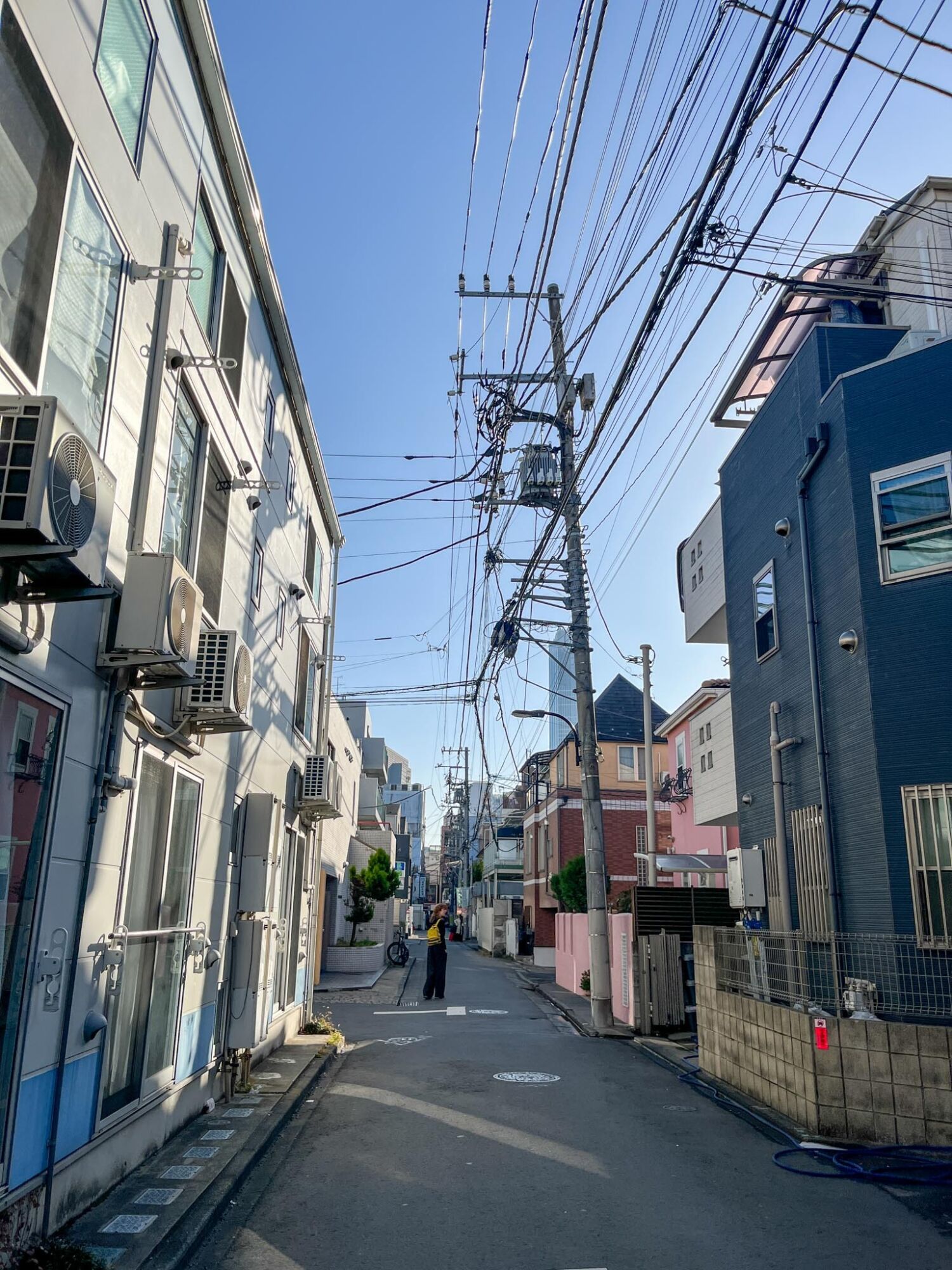
The interesting thing—no doubt often observed—is how ordinary so much of the dense private domain is in the suburbs. Apartment building after apartment building shows little regard for neighbouring developments, with urban harmony and street-level quality often lacking. There are also not many small public spaces, like pocket parks or places to stop and sit. That said, the low-rise housing and fine-grained commercial and retail activity bring plenty of life to the narrow streets around the busier areas.

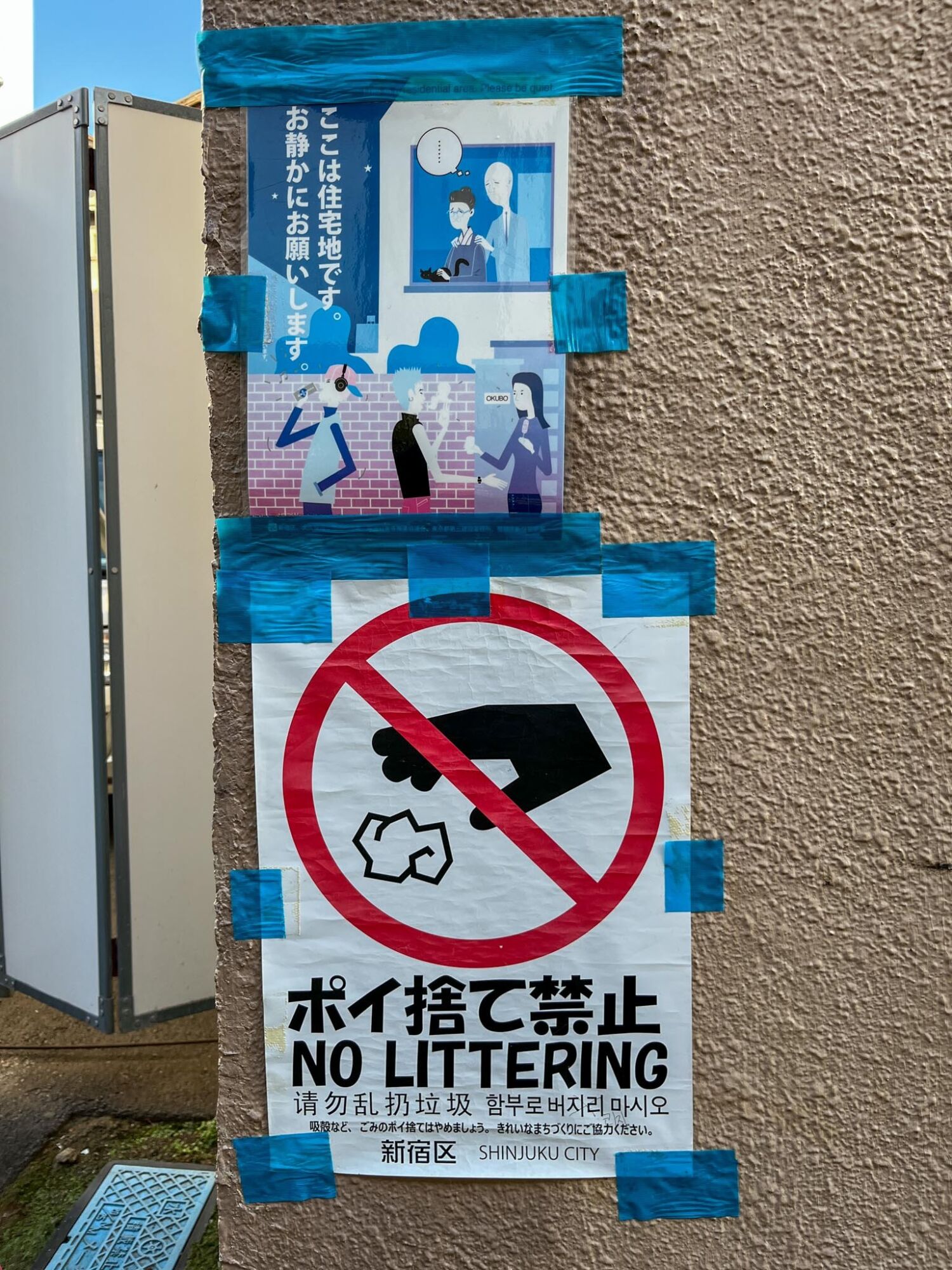
It’s the bigger public systems that stitch the city together — public transport, major parks and gardens, and a well-managed road network. These are reinforced by a strong sense of civil obedience, with people following shared norms like keeping left or right, obeying pedestrian signals, not littering, being mindful of noise, and avoiding smoking on the street.

1. Fine grain, low rise streets near Shinjuku 2. Top sign says ‘This is a residential area. Please be quiet’, and below ‘No littering’

Behind the scenes, a highly evolved business-to-business exchange and distribution system keeps locals and visitors fed, clothed and supported for day-to-day needs, as well as for dining and entertainment.

Tokyo = urban wonderland.

Glasgow and Scotland: A more independent economic future?

In Glasgow, I caught up with Neil McInroy, former CEO of the Centre for Local Economic Strategies (CLES) and now Global Lead for the Democracy Collaborative. Neil is a leading voice for Community Wealth Building (CWB), an area of focus for SGS in Australia. He was fresh from chairing a planning meeting of Scotland’s economic development peak body (the Economic Development Association of Scotland).

We discussed Scottish independence — the prospect of Scotland splitting from England, Wales and Northern Ireland to become a sovereign country. While Scotland has a degree of self-government within the UK, its policy autonomy remains limited, with key areas like defence, immigration, foreign affairs, trade and most taxation still controlled by Westminster.

It is evident that since Brexit and with shifts in the global economy, questions of economic sovereignty are now more important than ever. This means Scottish independence could make even more economic sense than it once did, when Scotland benefitted from the UK’s tax and transfer system and EU equalisation payments. Neil noted that, with its share of North Sea oil revenues, the benefits of significant export revenues from whiskey and tourism, and abundant wind for renewables offering relative energy independence, questions of Scottish economic sovereignty and independence are on the rise again.

Neil also suggested that Scottish economic development is constrained by labour shortages and that many in Scotland have a very different take on immigration than England. He also floated the notion that Scotland, given its relative underpopulation and ageing population, could present itself as a ‘sanctuary nation’ for many people as the world suffers more climate change-induced migration.

He questioned the imported orthodoxy of ‘city region’ economic development being suggested in recent policy work for Scotland, noting the relatively modest size and isolation of Glasgow, Edinburgh and Aberdeen. On the other hand, Scotland has embraced Community Wealth Building, with a Minister for Community Wealth and the passage of the Community Wealth Building Act through the Scottish Parliament (noting Neil’s significant role in promoting this outcome). While this agenda is still developing, it highlights the country’s progressive and independent potential.

Out and about in the city, Glasgow was great. Initially established in the 6th century around an abbey on a high point near the River Clyde, it grew into a major trading port from the 1700s with access to the sea. The city expanded west from the original settlement, with merchants recalled in the street names across the grid. It grew quickly through the 18th and 19th centuries on the back of the British Empire’s industrial expansion and the earlier slave trade – an aspect of the city’s history subject to a public reckoning.

The historical endowment lives on in grand buildings, monuments and institutions like the university and museums. Eclectic shops, pubs and back-lane theatres are present in the student areas around the university. The Kelvingrove Art Galleries nearby are wonderful, with a range of urban history, natural history and modern art displays, including an excellent exhibition of the work, life and milieu of Charles Rennie Mackintosh, Glasgow’s brilliant architect and artist, who influenced European design movements such as Art Nouveau and Secessionism.

Glasgow doesn’t have the dramatic physical charms and history of its rival Edinburgh, just 75 kilometres to the east, but it will be front and centre in Scotland’s future, perhaps more independent, economic development.

London’s first suburbs and the cycles of urban change

Lately, through reading about Shakespeare's life, I've learnt a little about the growth of London beyond the old city and its Roman walls, which still generally define the geography of the City of London (though it extends somewhat further west than the Roman era Ludgate). In Shakespeare's time, in the late 16th century, the city was expanding northwest into Shoreditch and Spitalfields, and south across the river into Southwark and Bankside. Shakespeare’s plays were first performed at ‘The Theatre’ and the ‘Curtain Theatre’ in Shoreditch, just beyond the city walls along Bishopsgate. They later moved to purpose-built venues like the Globe and the Rose in Bankside, across the river.

To explore Shoreditch and Spitalfields, I met up with an old friend, Phil Turton, a senior project manager at Historic England, who talked me through some of the history.

The mile-long Brick Lane runs north-south to the east of Shoreditch High Street and today is a hub for independent shopping, dining and both rotating and permanent market activity.

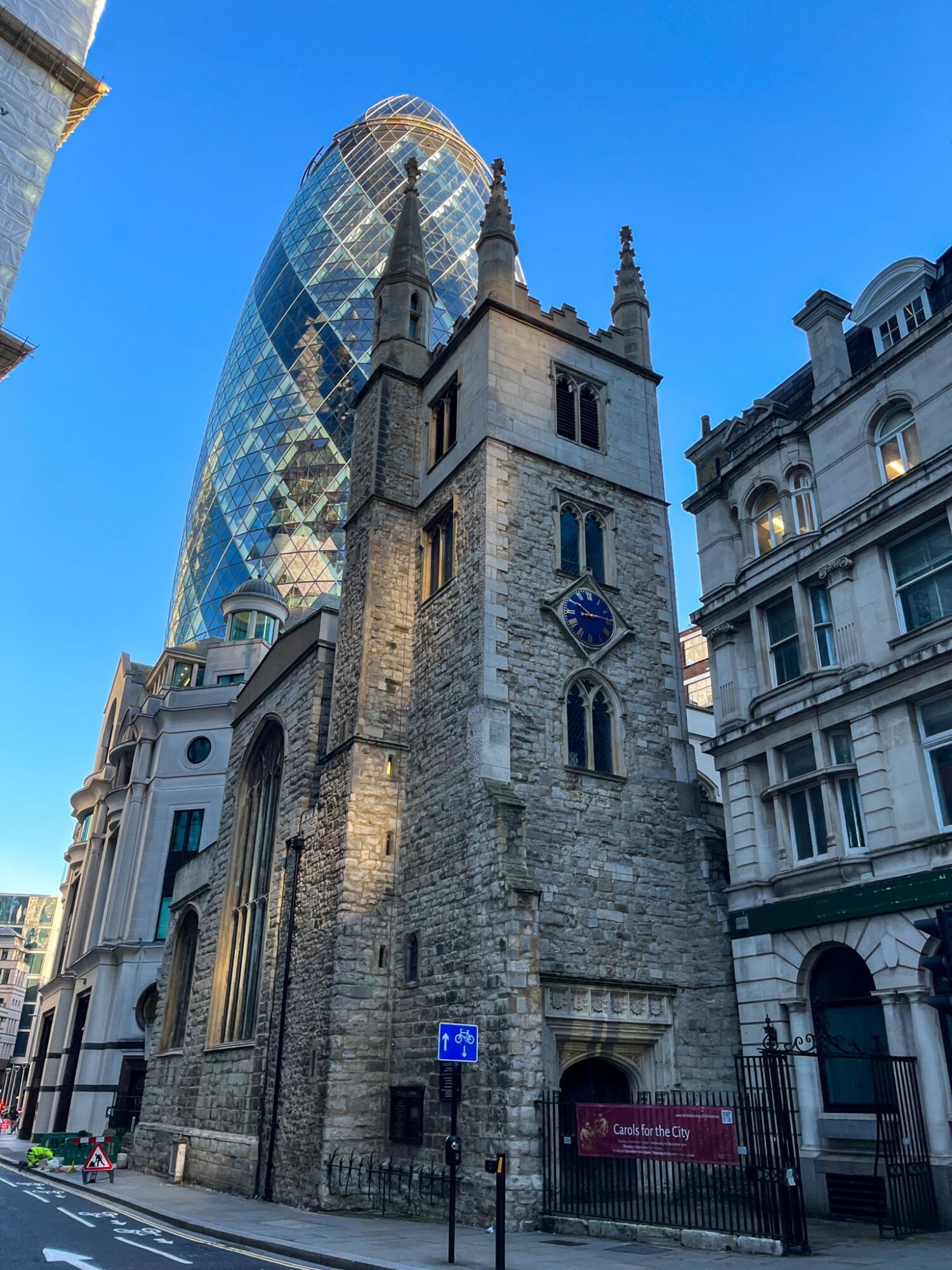
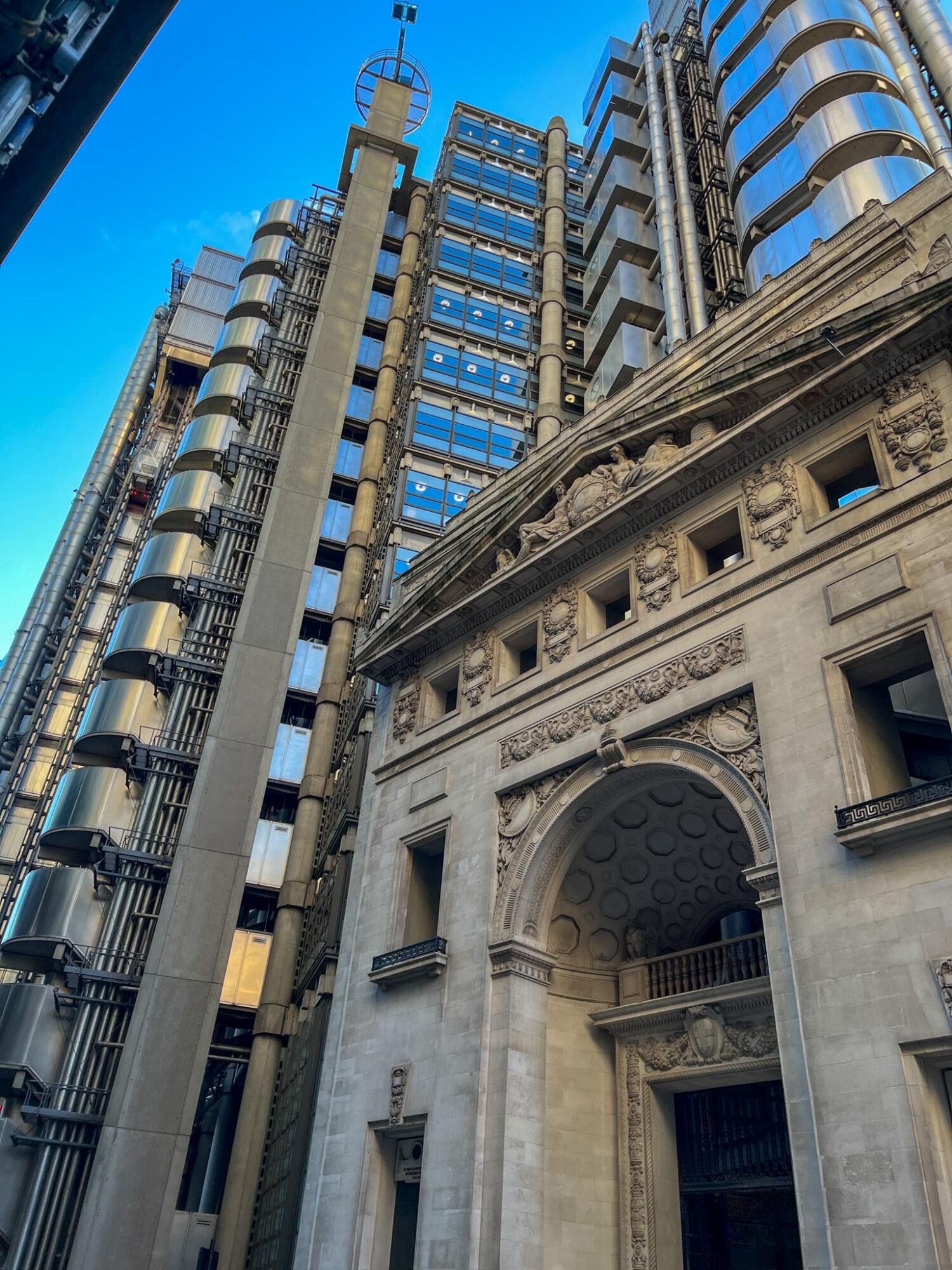
Modern office buildings dominate some precincts on the fringes of Spitalfields, just beyond the city, including the famous Gherkin by Foster and Partners (opened 2004), and the extraordinary inside-out Lloyd’s of London building designed by Richard Rogers (opened 1986). These, and other buildings, overshadow older churches such as St Andrew Undershaft on the corner of St Mary Axe and Leadenhall, which existed in Shakespeare's time.

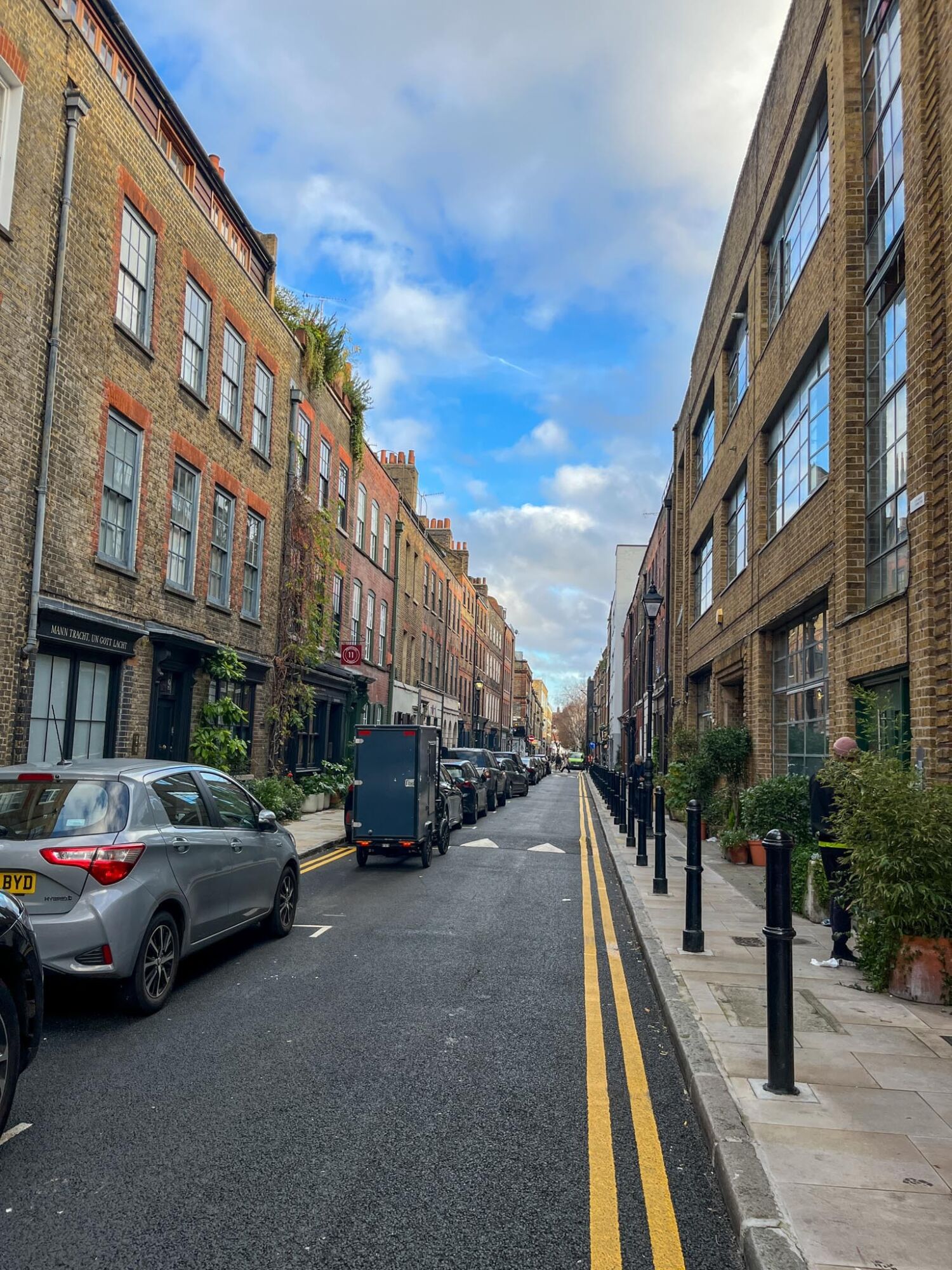
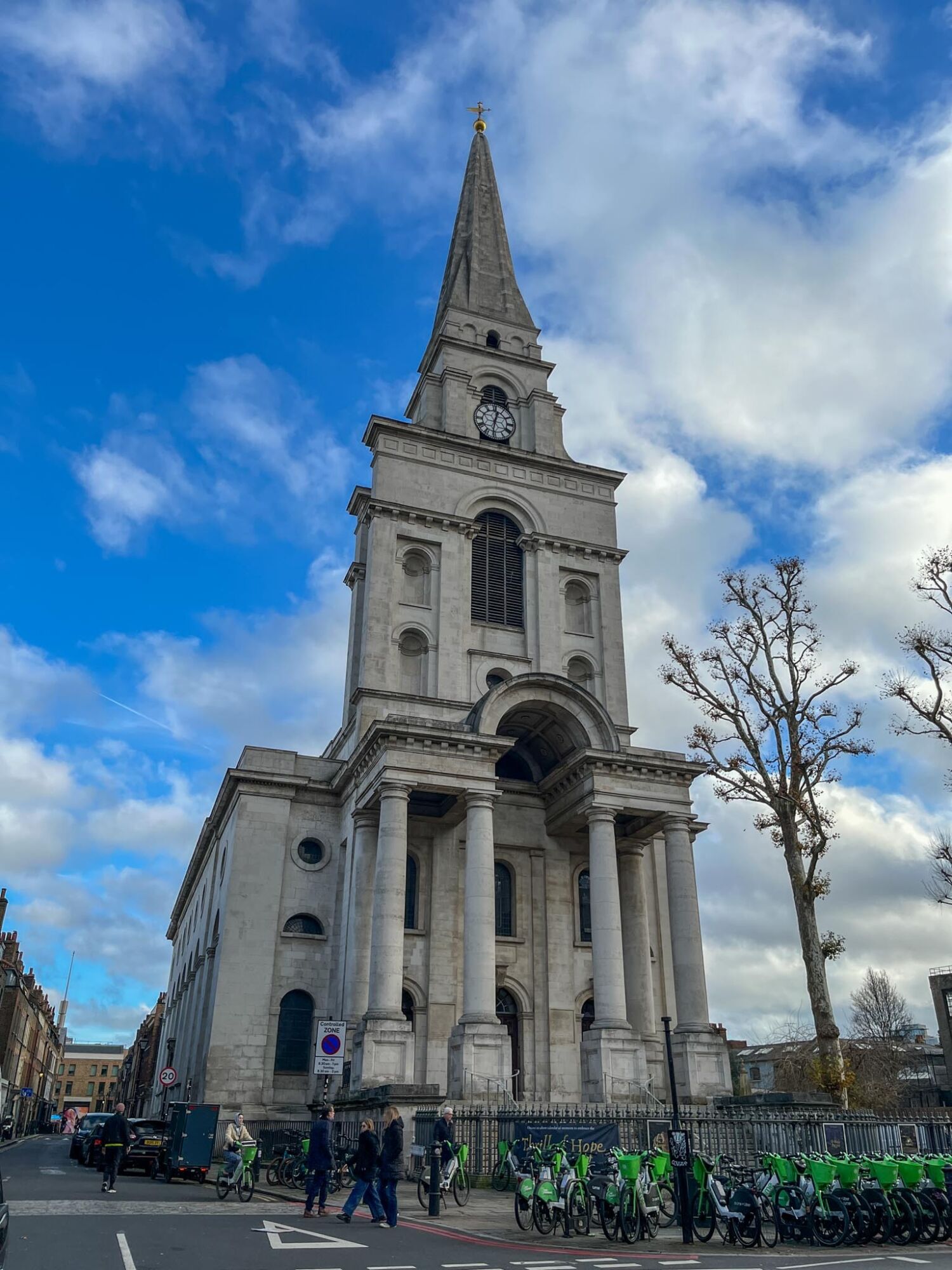
The striking built form in the residential streets of Spitalfields is made up of regular, elegant terraced buildings. These are predominantly from the 17th century, when the French Protestant Huguenots fled persecution in France and settled in London as the city’s first refugees.

1. 15th century meets 21st century: St Andrew Undershaft in front of Foster and Partners ‘Gherkin’ office building 2. Foster and Partners Lloyd’s of London building 3. Georgian terraces built 1718-19 for Huguenot silk weavers, Princelet Street, Spitalfields 4. English Baroque Christ Church Spitalfields, 1714-29, by Nicholas Hawksmoor

Since then, different immigrant communities have settled in Shoreditch, Spitalfields and just to the east in Whitechapel. Jews fled the pogroms of Eastern Europe (Poland and Ukraine) from 1881-82, when imperial Russia acquired territories with large Jewish populations, and targeted anti-Jewish riots began, though there was already a Jewish presence just beyond the city walls in Shakespeare's time at the Bishopsgate entrance. The Jewish legacy remains in the bagel shops of Brick Lane — including one that opens around the clock — and in scattered synagogues, many of which have now closed. In more recent times, the area has become a focus for Bengali migration, evident in the street stalls, diverse local food and mosques.

‘First’ suburbs beyond city boundaries, like Newtown and Surry Hills in Sydney, Fitzroy in Melbourne (also formerly known as Newtown), and Shoreditch and Spitalfields in London, are often characterised by narrower streets, finer-grain built form and a more informal distribution of land uses, often including industrial activities. Though developed in different centuries, these areas typically served as the city’s less salubrious ‘backyard’. They became home to labourers and workers and attracted migrants who could typically only afford modest housing.

By the middle of the 20th century, following the rapid industrialisation of the late 19th century, these areas — despite their proximity to commercial city centres — were rundown and often characterised as slums. Spitalfields and Whitechapel were already hotbeds of grime, crime and poverty by the 1880s, playing host to the five murders attributed to Jack the Ripper.

In the last 40 years, in the era of financialisation and globalisation, higher-value business service jobs grew rapidly in and around central city areas . The ‘first suburbs’, once slums or at least the working-class areas, have become desirable for young professionals, students and visitors. The fine-grained built form, mix of housing and the independent and diverse ownership opportunities for businesses and operators have made these areas attractive.

Spitalfields and Shoreditch, while still visibly hosting — and in some parts still dominated by — different migrant communities (with Whitechapel in particular strongly Bengali) are now ‘gentrifying’, with rapid rises in property prices and more upmarket goods appearing in shops and stores, alongside market bargains still to be found among vintage clothing, stalls and knick-knacks.

While Bankside has stolen a march in recalling Shakespeare's London's history through the reconstruction of the Globe and the display of the Roses remains, his presence is returning to the north side with a new Shakespeare museum due to open on the site of the old Curtain Theatre in Shoreditch.

Lyon: Transport, public space and the power of civic architecture

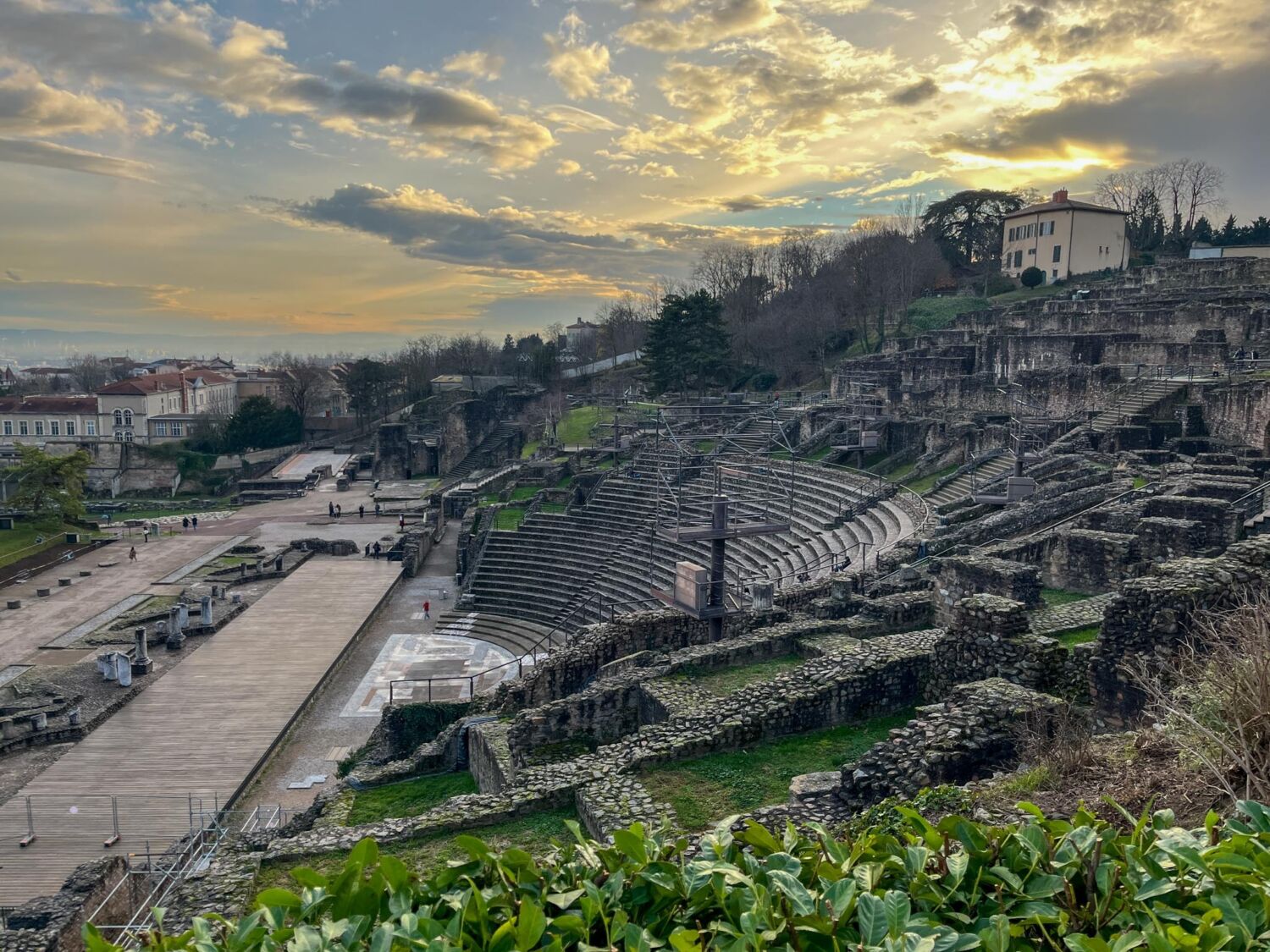
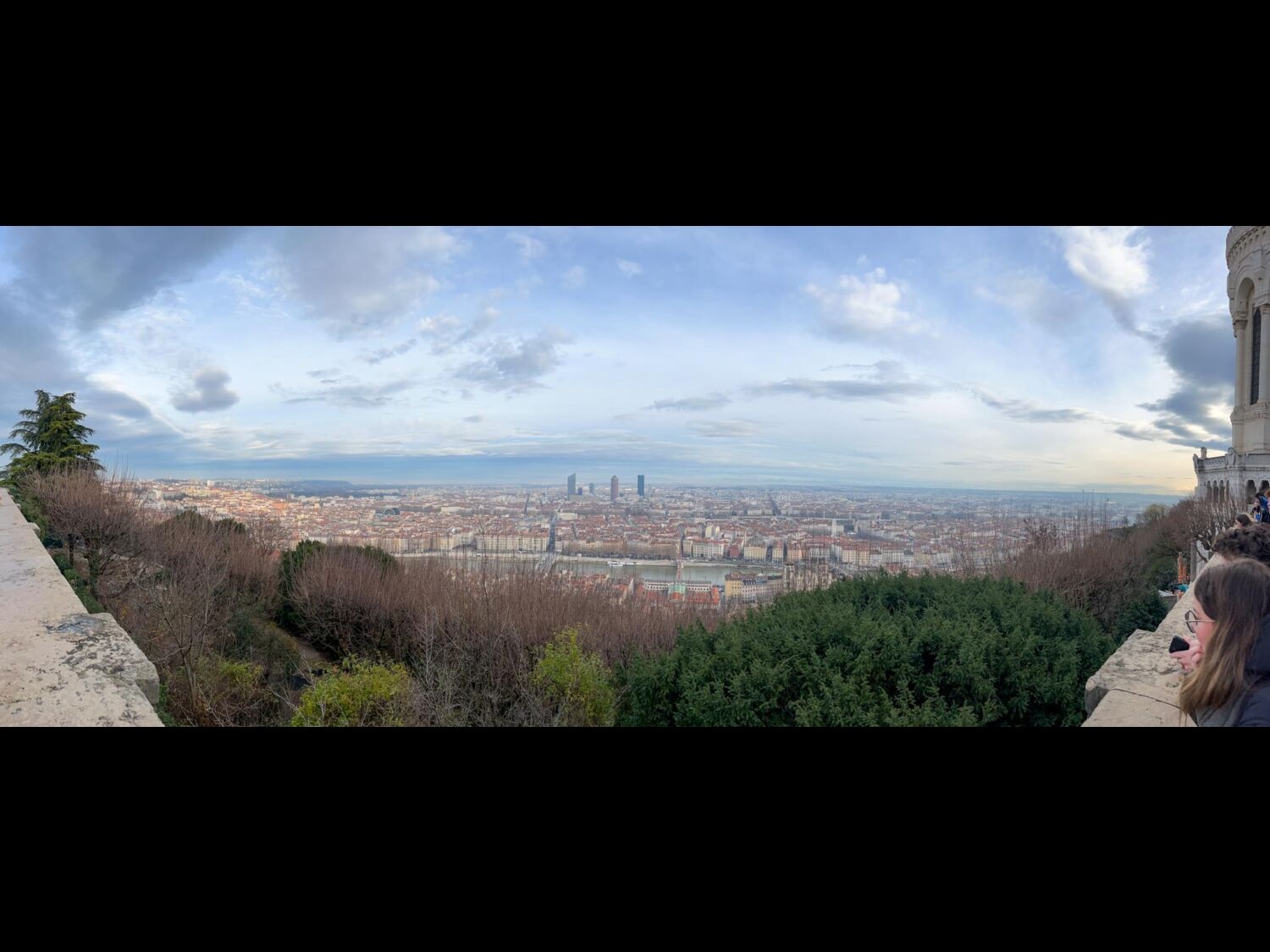
Lyon is France’s second-largest metropolis, with over 2.3 million people. It was originally founded as the capital of Roman Gaul on a hilltop rising steeply above the peninsula between the Rhone and Saone rivers. The city then grew along the riverbanks, filled out the peninsula, and spread beyond, mostly to the west.

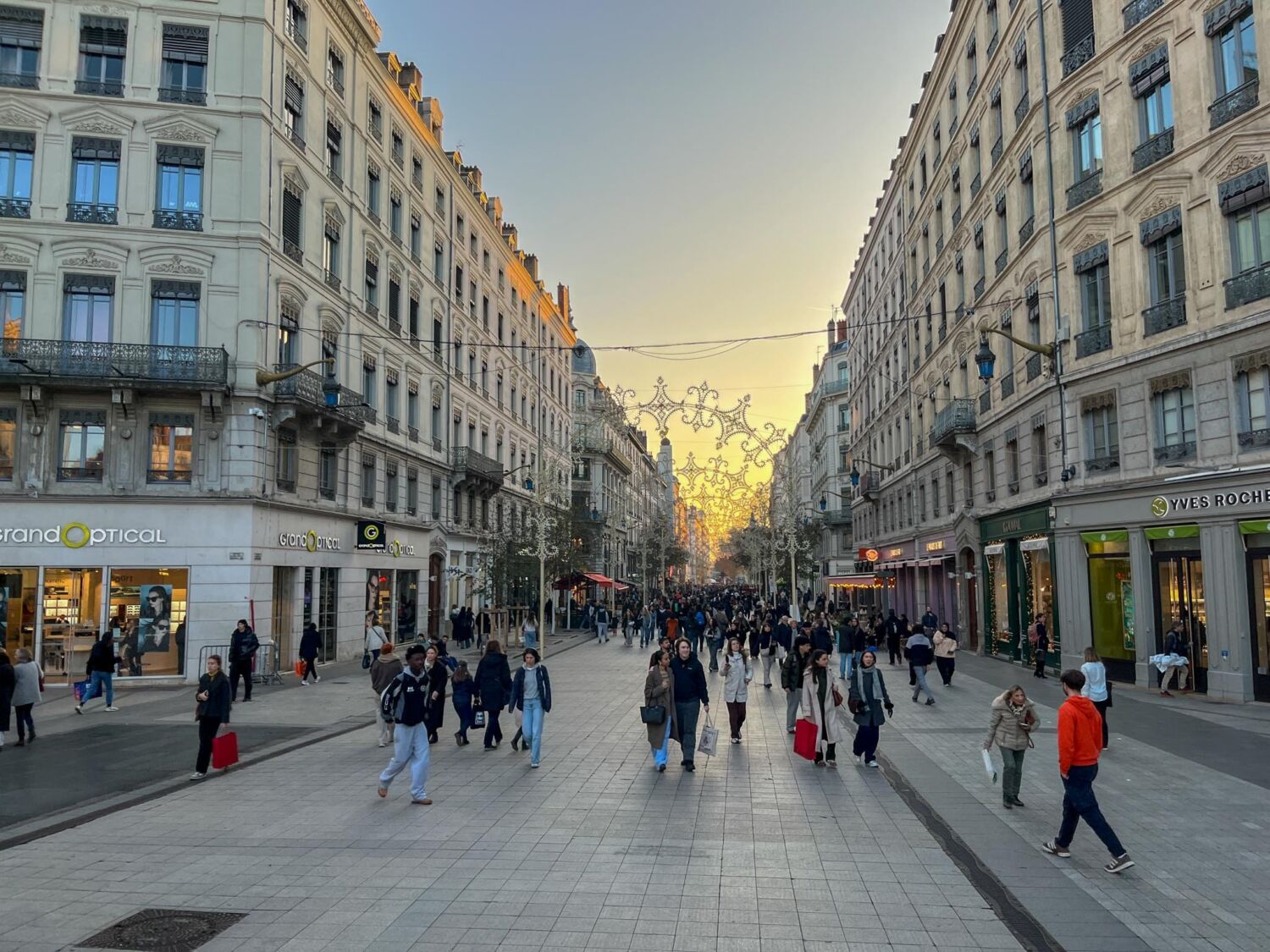
1. The Roman forum in the original settlement of Lugdunum, part of the UNESCO World Heritage site in Fourviere 2. 1. View of Lyon east beyond the Rhone from Fourviere (‘the hill that prays’) above Vieux Lyon (old Lyon). The tall commercial buildings are near Gare de la Part-Dieu, one of Lyon’s two major railway stations 3. Lyon’s long pedestrianised main shopping street, Rue de la Republique

Vieux (old) Lyon, down the hill from the Roman-era settlement at Fourviere, along with the peninsula between the two rivers, and the east bank of the Saone, forms the historic core of the city. It is beautiful, with cobbled streets, diverse ground-level shops, riverside parks and boulevards, formal squares, and a harmonious built form of a mostly uniform six-storey buildings with active ground floors, punctuated by major hotels, churches, and civic and cultural buildings in classic and historic styles. The best of French dining and entertainment is on offer in bar after bar and restaurant after restaurant, as well as in neighbourhood patisseries and boulangeries. Lyonaisse cuisine is rich in meats and sauces, and there is also a local sweet delicacy, the slightly sickly pink-crusted praline, on display in patisserie windows.

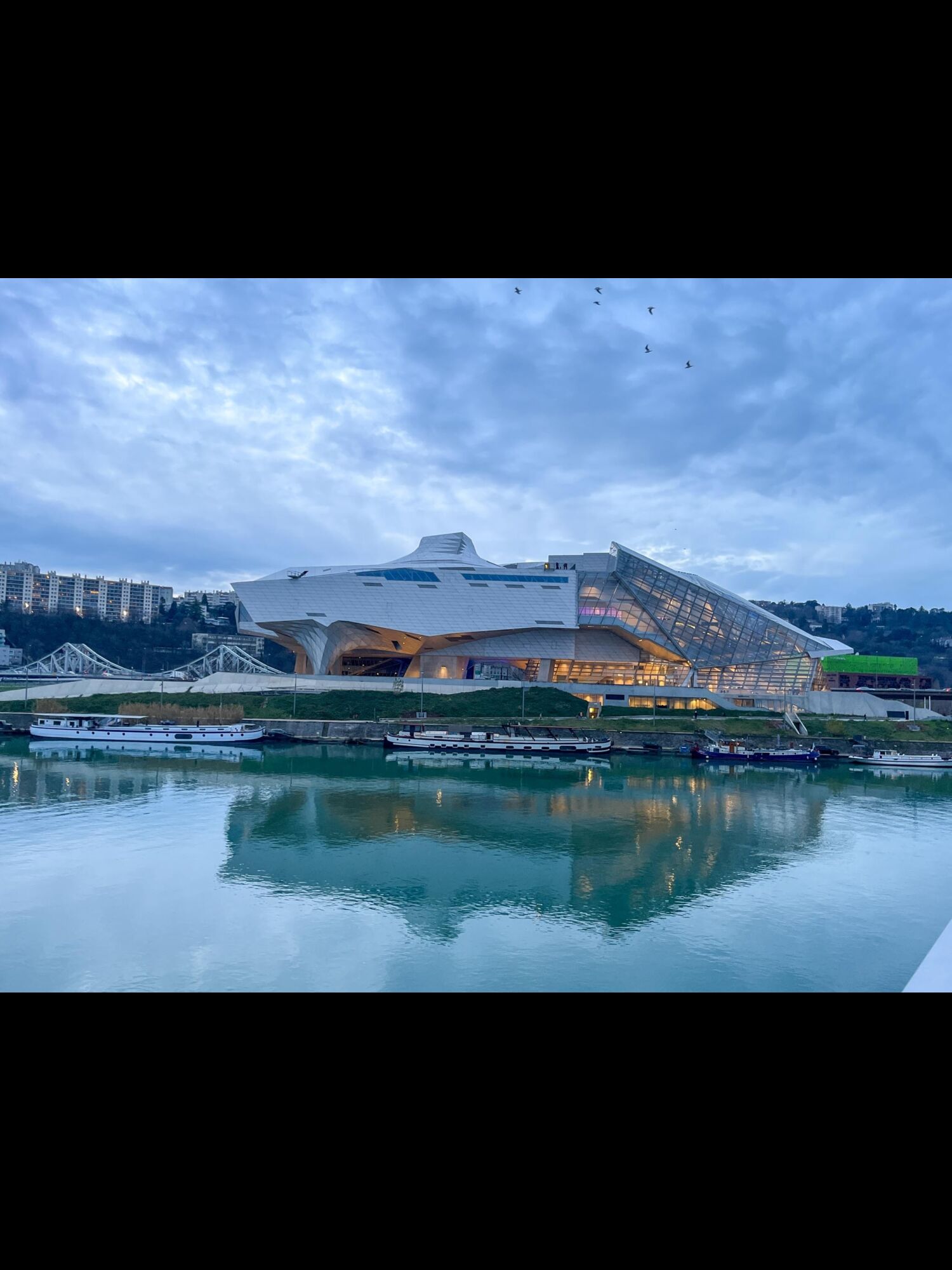
Looking at a map of the city, your eye is drawn to the tip of the peninsula at the confluence of the two rivers. This area, known as La Confluence, was once an industrial, transport and dockside hub and has been a renewal project since the early 2000s. It is now home to Lyon’s own modern waterfront landmark, part of a broader multi-city trend seen in places like Bilbao’s Guggenheim and Hamburg’s Elbphilarmonie Concert Hall at Hafen City, though arguably pioneered more than 50 years ago by Sydney’s Opera House at Bennelong Point. Designed by Wolf D. Prix & Partner of Coophimmelb(l)au, the massive glass edifice of the spectacular Musee des Confluences rises high above the river level and provides a dramatic contrast to the stately, ordered and more formal 18th and 19th century architecture that defines much of central Lyon.

Inside the foyer, the glass ceiling far above creates an impressive entrance space. Extravagant ramps, extended staircases and escalators are exposed as sculptural elements, each contained in their own atrium glass house. Moving between the building levels in this space is a beautiful experience.

The museum is devoted to anthropology, evolution, origins, and societies, with temporary exhibitions consistent with these themes . While there, I visited an excellent temporary exhibition on zombies — a religious and cultural phenomenon beginning in Haiti, shaped by a mash-up of pre-Columbian native toxicology practices, sub-Saharan religious traditions brought by enslaved people, and later Catholic influences.

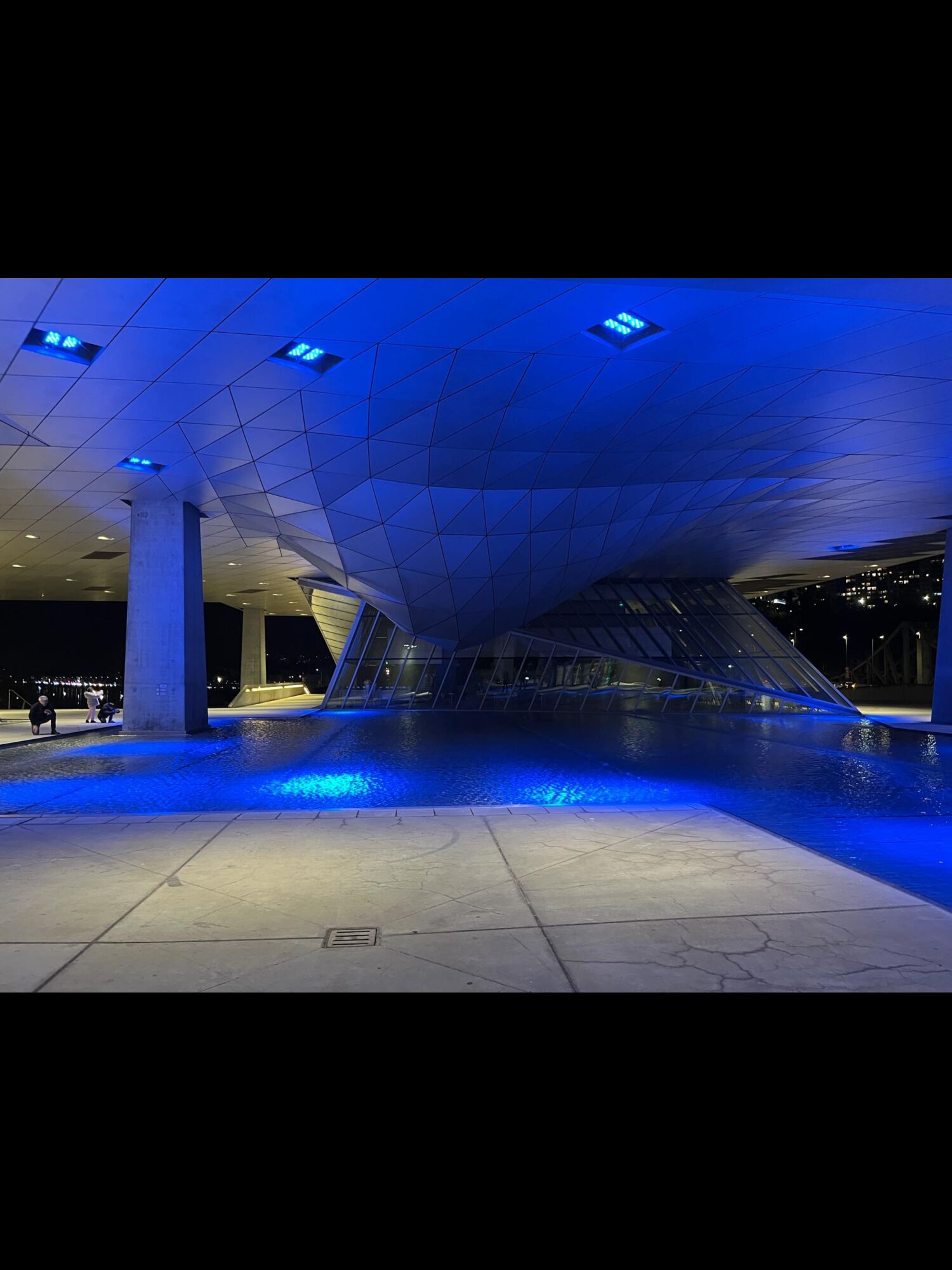
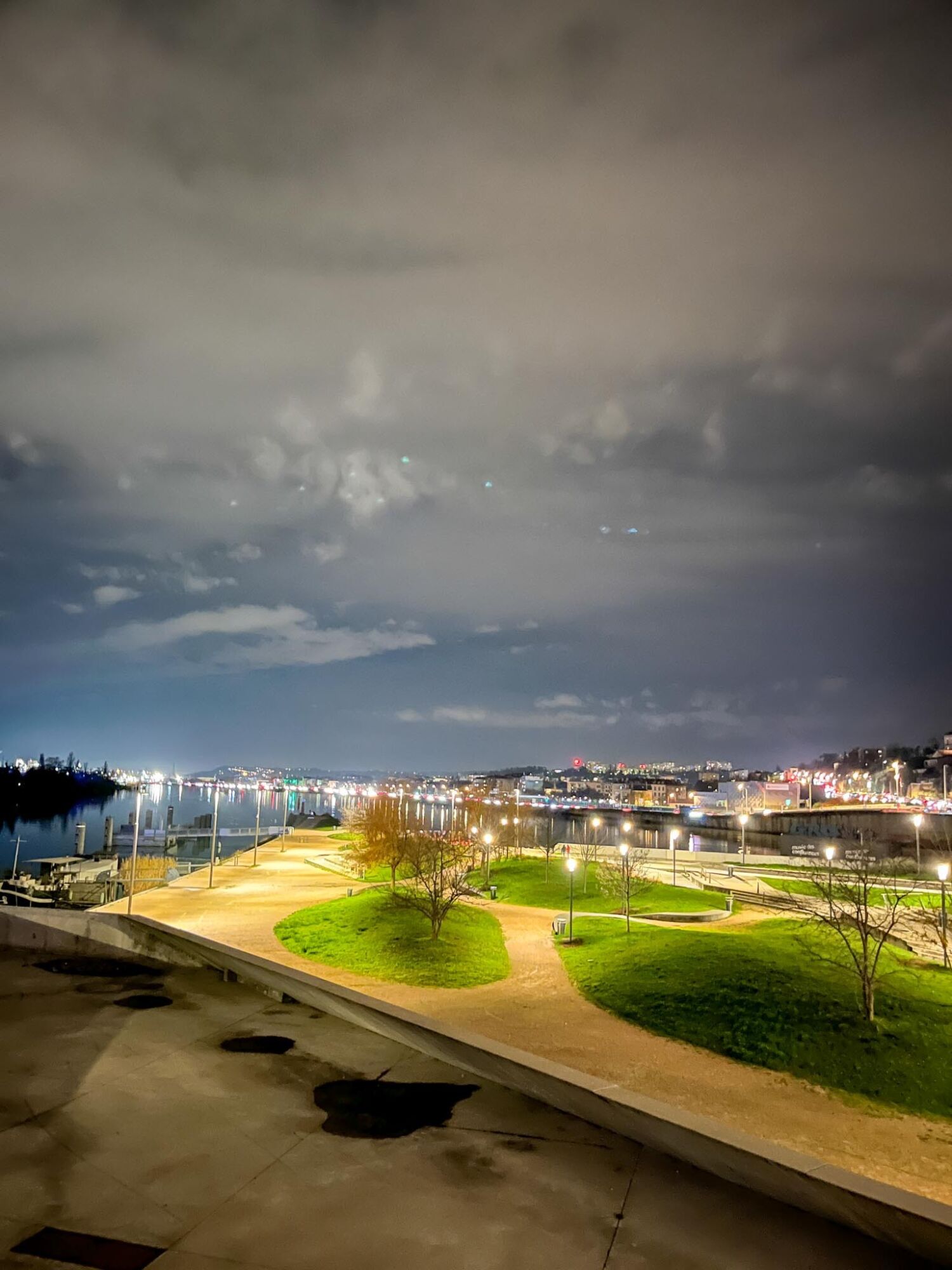
The exit from the building leads to a large outdoor terrace with a shallow pool at the rear, still well above the ground and river level. From here, the view looks south over tiered formal parkland, with paths leading to the actual point where the rivers meet.

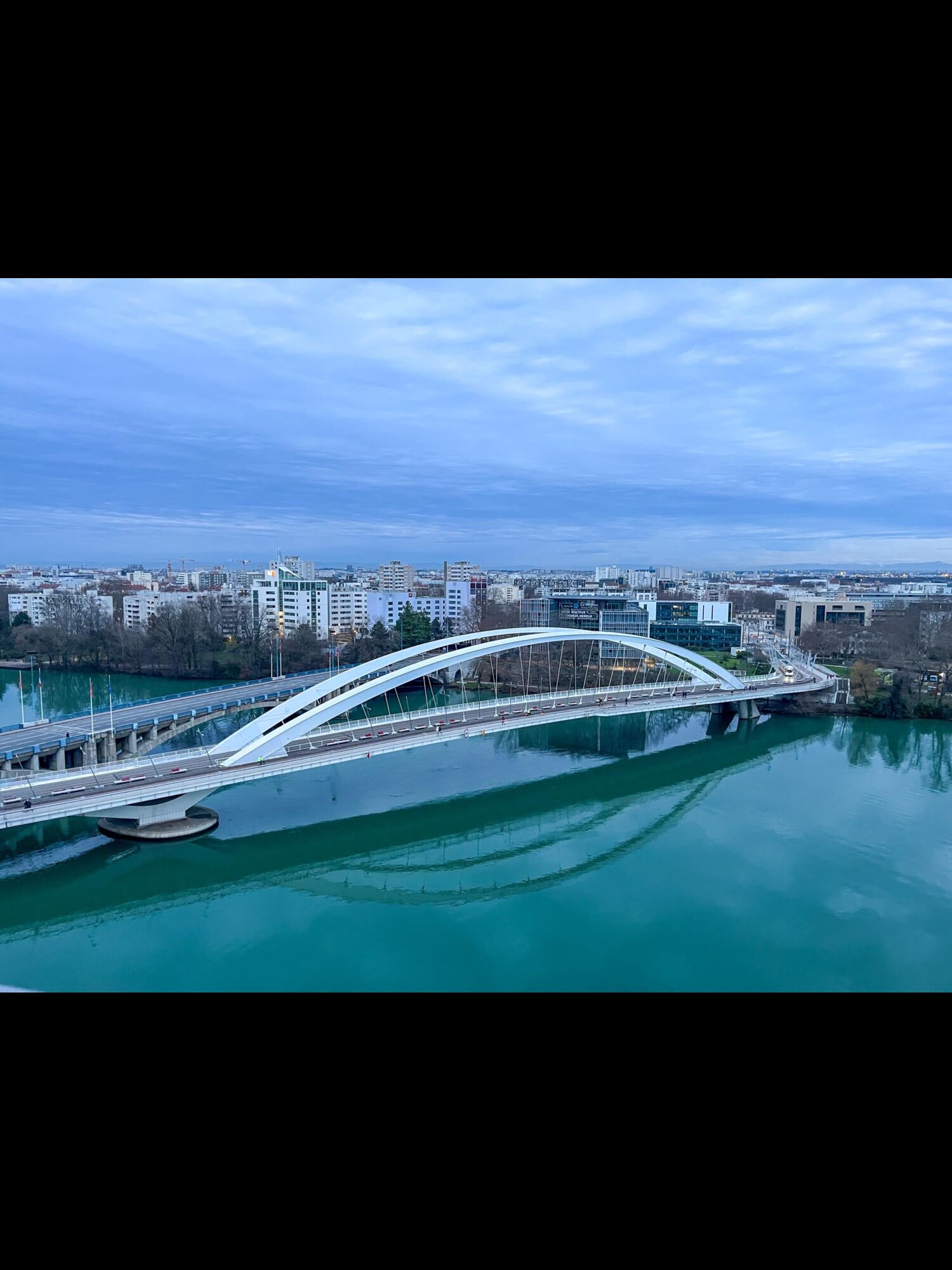
Back towards the front, the building is connected to Lyon’s excellent public transport system via a tram and pedestrian-only bridge — an elegant structure that is well tuned to the location, the building and the spaces it serves. All very impressive.

1. Musee des Confluences by Wolf D. Prix & Partner of Coophimmelb(l)au 2. Pont Raymond Barre, pedestrian and tram only bridge from the Museum 3. Terrace and pond to the rear of the museum 4. Jardin du Musee des Confluences at the point where the Rhone and Saone Rivers meet

From Lyon, I made a day trip to Aix-Les-Bains, a spa town near the Alps on Lac du Bourget, France’s largest lake.

SGS Economics and Planning Pat Travels15
Lac du Bourget, France’s largest lake, at Aix Les Bains, spa town in south eastern France

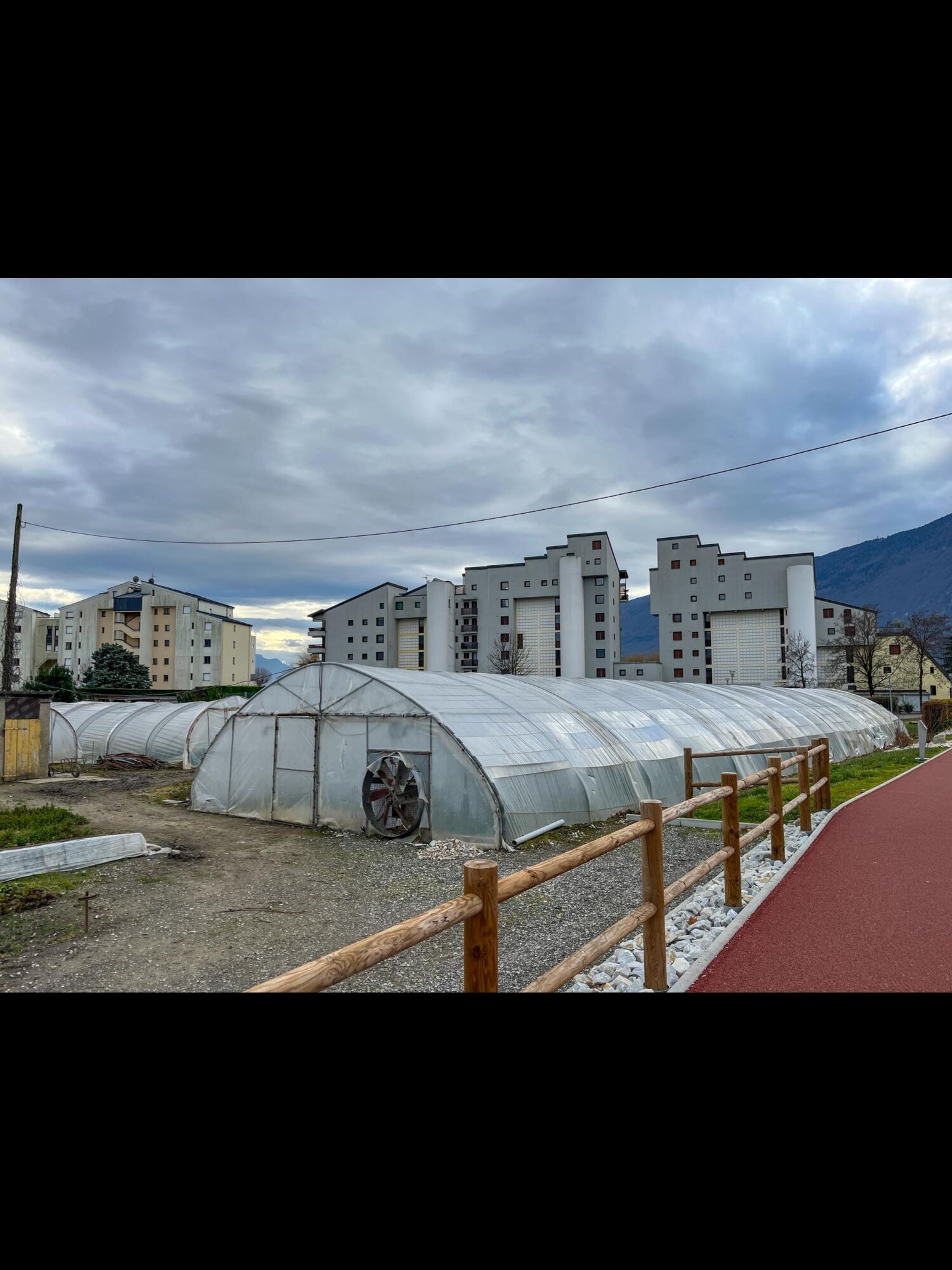
Walking from the lovely old town to the lake foreshore took me through an integrated residential development, served by a bike — and pedestrian-only pathway (alongside Chemin des Biatras), with at-grade centralised parking, a tennis court and a large communal garden, including a polytunnel greenhouse. The medium-density residential buildings surrounding the garden are quirky, with hard edges and distinctive geometry.

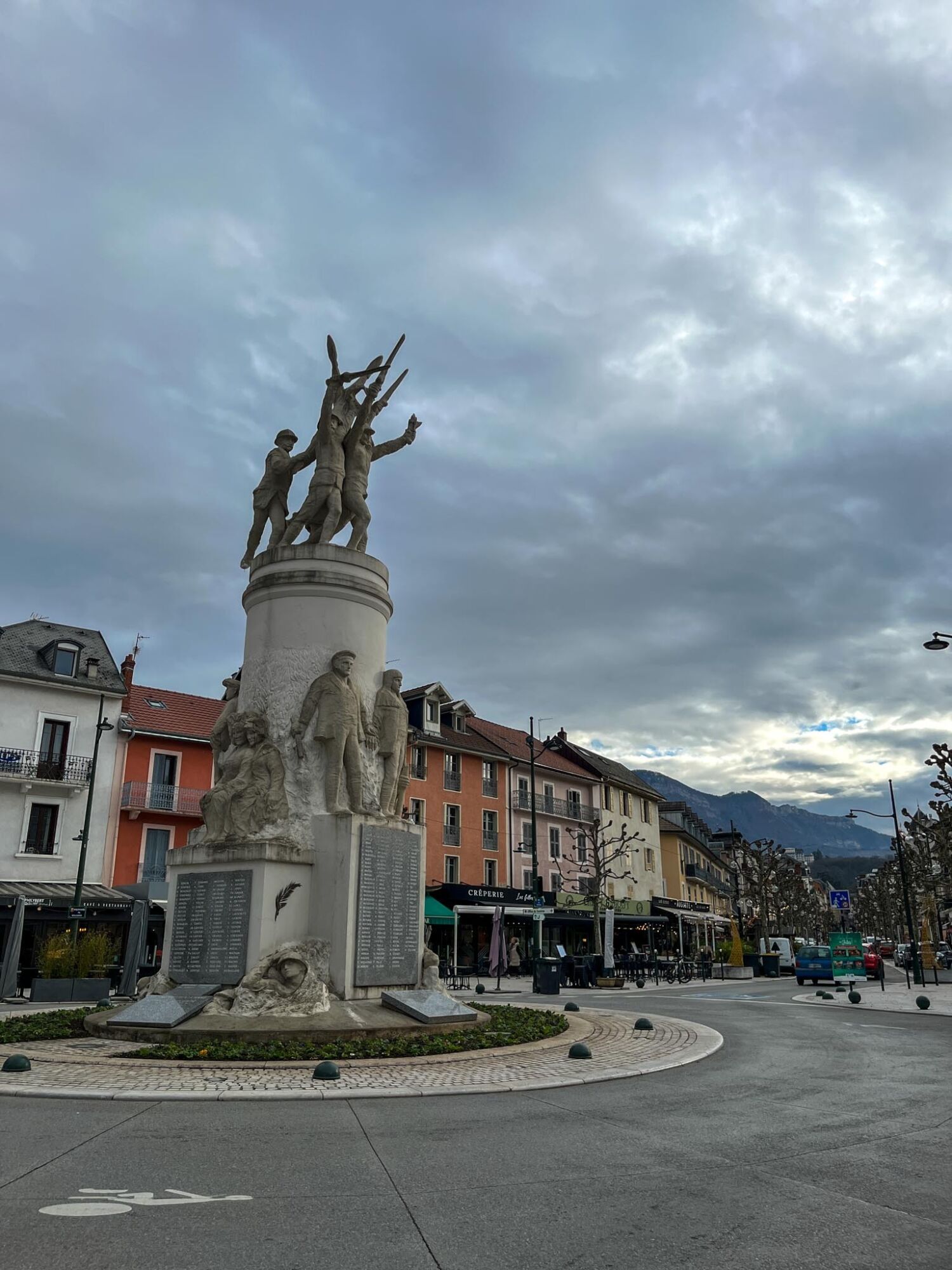
1. War memorial at the bottom of Rue de Geneve, the gorgeous main street in the old town of Aix Les Bains 2. Integrated residential development alongside Chemin des Biatras in Aix Les Bains

I flew out of Lyon airport and was impressed at how seamless the Lyon city to airport travel experience was by comparison with Melbourne’s. From my accommodation in Vieu Lyon, I walked a few minutes to catch the driverless metro to the end-of-line station. From there, I took a dedicated tram (‘La Rhone Express’) straight to the airport terminal and nearby regional train station. Sustainable and friction free travel!


Connect with us on LinkedIn


Author(s):
Experts in this area:
SGS Economics Planning Pat Fensham
For further information contact:

Patrick Fensham

National Leader for Urban Policy & Governance | Principal & Partner

View profile →